
Which browser wallet should a U.S. DeFi user choose: Rabby extension or the usual alternatives?
What happens when you stop accepting “one wallet fits all” as a given and instead treat a browser wallet as a risk-management and workflow tool? That question reframes the choice between mainstream browser wallets and alternatives like Rabby: the decision isn’t only about fees or chains supported, it’s about how a wallet surfaces risk, models transactions before they land on-chain, and fits into a multi-chain DeFi workflow common to active U.S. users.
This article compares Rabby (a browser extension and app-focused wallet) with typical alternatives, explaining the mechanisms that matter, where each approach breaks, and how to choose based on concrete habits: frequent cross-chain swaps, LP management, yield-farming, or simple custody. I’ll unpack pre-transaction analysis, simulation, UX differences, and the trade-offs between convenience, security, and composability—then finish with a short set of practical heuristics for decision-making and what to watch next.
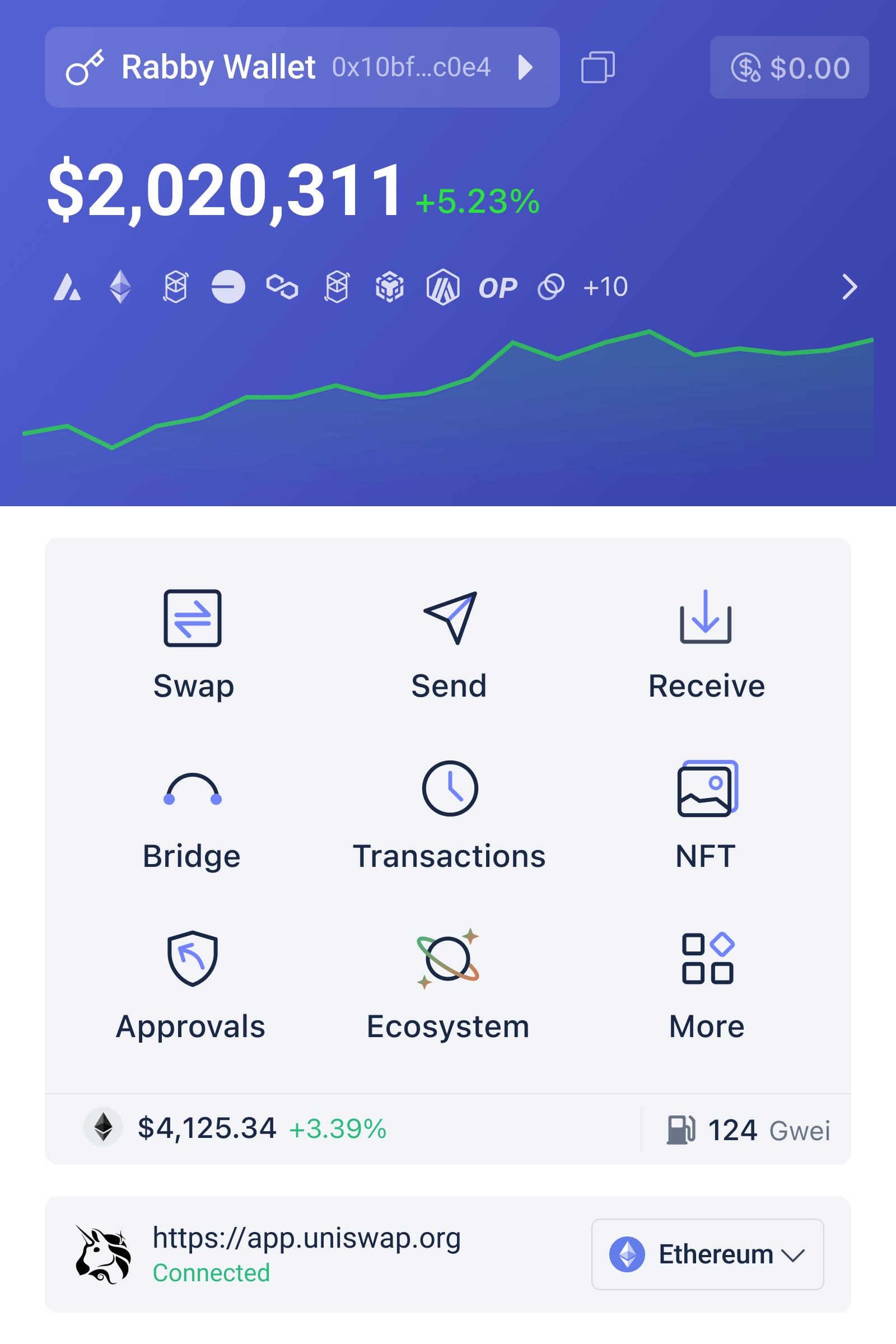
How Rabby’s design differs — mechanism-first
At a mechanism level, browser wallets do three core things: key management (holding private keys locally), RPC orchestration (talking to blockchains via providers), and transaction composition/presentation (building and showing the transaction for user approval). The meaningful differences between wallets come from how they implement the third item and how they interpose security tooling into the user flow.
Rabby has evolved to emphasize two mechanisms not present or as visible in many mainstream wallets: pre-transaction security analysis and transaction simulation. Pre-transaction analysis inspects what the signed transaction will actually do—token approvals, contract calls, potential token drains—before you click confirm. Simulation runs the transaction off-chain (or via a dry-run against a node) to show likely effects such as slippage, state changes, or failure reasons. Those mechanics change the decision space for users: they transform many surprises into prior information.
That change is not trivial. For an experienced DeFi user, knowing whether an approval will grant unlimited spending or whether a swap will fail because of front-running-derived price movement materially alters what it is safe to execute. It’s also where Rabby positions itself: a UX and feature set shaped for multi-chain power users who make frequent, complex transactions rather than for casual single-chain holders.
Side-by-side: Rabby vs mainstream browser wallets (practical trade-offs)
Below is a trade-off grounded comparison across typical decision axes. Each line explains the mechanism, why it matters, and the boundary conditions you should be aware of.
Security signaling and transaction comprehension. Mechanism: Rabby performs pre-transaction checks and simulations; mainstream wallets often show a raw call or basic nonce/gas info. Why it matters: preflight warnings reduce reliance on external tools and lower human error when interacting with unfamiliar contracts. Boundary: analysis can give false reassurance; simulations depend on accurate node state and cannot foresee all MEV or cross-chain relay failures.
Multi-chain management and network UX. Mechanism: Rabby aims for smoother switching and clearer chain context. Why it matters: mis-sending tokens to the wrong chain is an irreversible, common user error. Boundary: richer network UX is helpful, but it doesn’t remove on-chain compatibility problems (e.g., token bridges introducing custody risk).
Integration with DeFi dApps. Mechanism: mainstream wallets (wallet connectors) have wide compatibility; Rabby focuses on DeFi-specific tooling and granular permission control. Why it matters: granular permission controls let you restrict approvals and reduce long-lived allowances, lowering exposure to exploit. Boundary: compatibility with novel dApps or experimental chains could lag because tighter permission models sometimes require coordination with dApp frontends.
Performance and resource model. Mechanism: extensions trade memory and background processes for responsiveness. Why it matters: a wallet that simulates transactions may consume more RPC calls and sometimes require faster node access. Boundary: increased background activity can reveal privacy signals or require paid infrastructure for consistent performance.
A sharper mental model: wallets are risk engines, not just key stores
Most users conceive of wallets as vaults. That’s a useful starting point but incomplete. For active DeFi users in 2026, a wallet should be read as an engine that amplifies or mitigates particular classes of risk. There are at least four risk vectors a browser wallet affects:
1) Operational risk: accidental confirmation of wrong chain or token. UX design reduces this. 2) Contract risk: interacting with malicious or buggy contracts. Pre-transaction analysis and permission controls reduce exposure. 3) Market/MEV risk: front-running, sandwich attacks, or failed slippage protections. Simulation and better fee/gas insights help but cannot eliminate MEV. 4) Privacy exposure: a wallet’s network behavior can leak activity patterns to node operators or telemetry endpoints. Some wallets preserve privacy better by batching RPCs or using user-set nodes.
Rabby attempts to mitigate the first three more aggressively than many mainstream competitors by surfacing analysis and offering more granular permission control. That’s a choice of emphasis: it favors power users who trade off simplicity for control. A mainstream wallet often prioritizes universal compatibility and a gentle learning curve—better for onboarding but potentially riskier for complex DeFi actions.
Where this approach breaks: limitations and boundary conditions
It’s important to name where Rabby-style tooling is limited so readers can make an evidence-based decision. First, pre-transaction analysis is only as good as its heuristics and data sources. It can flag obvious badness (unlimited approvals, direct token drains) but cannot predict sophisticated time-delayed exploits or the dynamics of off-chain orderbooks. Second, simulations rely on node state; test-run results can diverge from on-chain outcomes when mempool reordering, gas wars, or cross-chain relayers intervene. Third, richer UX that exposes more metadata may add complexity for newcomers: more buttons, warnings, and options can increase cognitive load and lead to bypassing safeguards.
Finally, regulatory and regional context matters. U.S.-based users operate under evolving guidance around crypto custody, sanctions screening, and taxable events. A wallet that surfaces detailed transaction data is useful for bookkeeping and compliance, but it does not substitute for professional tax or legal advice. The wallet’s features can make compliance easier to document, but they cannot remove the underlying obligations.
Decision heuristics: which wallet fits your profile?
Here are concise heuristics to choose between Rabby-style and mainstream wallets:
– If you frequently interact with DeFi contracts, bridges, and multi-chain swaps: prefer a wallet that offers transaction simulation and granular permission control (Rabby’s feature emphasis). The preflight information reduces surprise and can save funds on complex flows.
– If you are primarily a long-term holder, focus on simplicity and broad compatibility. A mainstream wallet that is widely supported by dApps and custody-focused is likely lower friction.
– If privacy is a top concern, evaluate the wallet’s RPC defaults and whether you can configure private nodes or use Tor-like routing. Feature-rich wallets may create more RPC traffic that requires deliberate configuration to protect privacy.
– If regulatory record-keeping matters (e.g., you need clear transaction receipts for tax reporting), prefer tools that make transaction metadata explicit and exportable.
What to watch next (conditional scenarios)
Watch two conditional signals over the next year which will matter for U.S. DeFi users choosing a wallet. First, adoption of pre-transaction analysis as a standard: if more wallets adopt simulation and granular permission controls, the safety baseline rises and the feature becomes less of a differentiator. That shift would be signaled by broader integration of transaction simulation libraries into wallet APIs and dApp connectors. Second, MEV mitigation advances: improvements in private transaction relays or market-level solutions would reduce the marginal value of simulation for front-running protection. Both scenarios change which wallet features deliver the most practical value.
Until those changes are settled, the practical move is to combine tools: use a simulation-capable wallet like Rabby for active DeFi sessions and keep a simpler, cold-wallet habit for long-term holdings—treating the extension as a workspace, not the totality of custody practice.
FAQ
Is Rabby fundamentally more secure than MetaMask or other mainstream wallets?
Not fundamentally in custody terms: private keys remain on the device in both cases. Rabby increases security by adding pre-transaction analysis and permission controls which reduce the likelihood of user error and risky approvals. That lowers operational and contract-interaction risk but does not change the underlying custody model. A determined attacker who obtains your seed phrase or device still wins.
Can transaction simulation prevent losses from MEV or failed swaps?
Simulation helps by revealing likely failure modes and the expected output given current on-chain state, but it cannot guarantee protection from MEV, miner reordering, or sudden liquidity changes. Treat simulations as probabilistic guidance—not as absolute insurance.
Will Rabby work with every dApp and chain I use?
Rabby aims for broad multi-chain compatibility, but interoperability depends on how dApps implement wallet connectors and whether they expect specific wallet behaviors. If you use experimental chains or niche dApps, verify compatibility first. Feature-rich permission models occasionally require dApp-side coordination.
How should a U.S. user combine wallets in practice?
A common, practical pattern is “workspace + vault”: use a browser-extension wallet with simulation and permission controls for active trading and yield strategies, and maintain a separate, minimal-exposure wallet (hardware or cold) for long-term holdings. This reduces surface area for high-value, long-term assets while preserving operational flexibility.
For users arriving here from an archived landing page and wanting a straightforward next step, the project provides an official extension and app download that summarizes these capabilities; you can review the archived installer and release notes directly at the project documentation: rabby wallet.
Bottom line: treat your browser wallet as an active tool in your risk-management toolbox. If you trade across chains and interact with contracts, prioritize wallets that surface transaction mechanics and permissions. If you primarily hold, favor simplicity and audited custody options. Either way, know what your wallet amplifies—and what it cannot protect you from.